

Published:
How a short cut can give crabgrass an opening
Crabgrass does not take over a Midlands lawn because of one bad mowing. The bigger risk is a repeated pattern: cutting turf too low, thinning its cover, and leaving more open ground for weeds to use when conditions are right. A lawn with a strong, dense canopy has less exposed soil and gives crabgrass fewer easy places to establish.
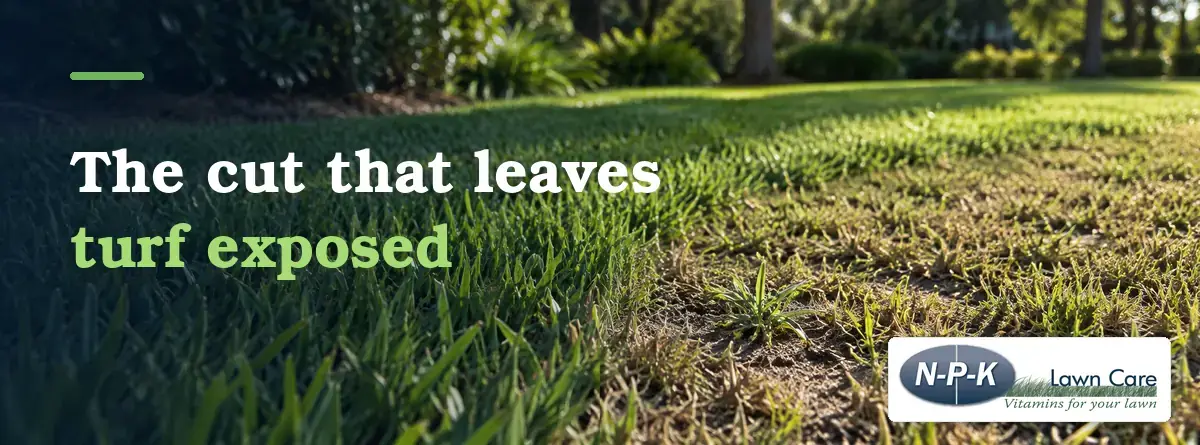
The cut that leaves turf exposed
Scalping happens when a mower removes too much leaf at once or cuts uneven ground so closely that stems and soil show through. That can slow the lawn’s recovery, especially if heat, dry soil, shade, or compaction is already limiting growth. Clemson Extension recommends mowing South Carolina warm-season grasses at the height appropriate for each type and removing no more than one-third of the blade at a time.
When the turf thins, sunlight can reach more of the soil surface. That does not guarantee crabgrass will appear, but it removes some of the competition that helps established grass hold its space.
Set the mower for the grass you actually have
There is no single mower setting that fits every Midlands lawn. Bermuda, centipede, zoysia, and St. Augustine grow differently, and shade or uneven ground can change how a lawn should be maintained. Check the grass type before changing the deck height. If the lawn has been kept too short, raise the setting gradually instead of removing a large amount of growth in one pass.
A mowing routine that keeps turf competitive
Let the lawn’s growth set the schedule. Mow often enough that the next cut does not remove more than one-third of the blade, and use a sharp blade for a clean cut. If the lawn is growing quickly after rain, it may need attention sooner; during slow growth or stress, avoid cutting just to maintain an unusually short look.
Pay attention to where thinning begins. A strip along a driveway may be getting scalped by uneven ground, while a weak area under trees may be short on light. The pattern can help distinguish a mowing issue from shade, drainage, soil compaction, insects, or another stress.

When mowing changes are not enough
Correct mowing supports a healthier lawn, but it will not solve every crabgrass problem by itself. The weed may already be established, or thin turf may have another cause. Avoid applying fertilizer or weed control by guesswork; the right response depends on the turf, the weed, the season, and product directions.
If crabgrass keeps returning in the same places, look at the lawn’s density, sunlight, watering, soil condition, and mowing pattern together. NPK Lawn Care builds lawn treatment recommendations around the property’s turf and soil conditions. Review NPK Lawn Care services or request a lawn consultation if you need help identifying what is weakening the turf.
Frequently Asked Questions
Can mowing too low cause crabgrass to grow?
It does not create crabgrass, but repeated low cuts can thin turf and expose soil, making it easier for weeds to establish.
How high should I mow a Midlands lawn?
The right height depends on the grass type and site conditions. Follow guidance for that turf rather than using one setting for every lawn.
Is one low mowing enough for crabgrass to take over?
Usually, one cut is not the whole cause. Repeated scalping, thin turf, exposed soil, and favorable conditions together create more opportunity for crabgrass.
Will mowing control crabgrass that is already growing?
Mowing helps maintain turf, but it is not a complete crabgrass treatment. Identify the weed and follow appropriate seasonal and product guidance.
More South Carolina Lawn Care Resources
Use the seasonal lawn care calendar, compare South Carolina grass types or review our professional lawn care services.