

Published:
October Is a Transition Month for South Carolina Lawns
Quick Answer: When looking after lawns in South Carolina in October, attention should be given to safeguarding the warm-season turf as its growth slows, taking steps to prevent fall and winter weeds, and modifying the watering schedule to suit the cooler weather. The appropriate method will vary according to the type of grass, the soil, the amount of rainfall, the irrigation system, and the present condition of the lawn.
By October a large number of lawns in South Carolina have moved beyond their period of peak summer growth; the days are getting shorter, the temperatures are dropping, and warm-season grasses like Bermuda, centipede, St. Augustine and zoysia will not recover from stress as rapidly as they did in midsummer. It is therefore a good idea at this time to observe what the lawn is indicating rather than simply applying more fertilizer or water.
A seasonal inspection can likewise show weeds, compacted areas, drainage issues, insect damage, or thin turf that should be assessed prior to any treatment. NPK Lawn Care is able to prepare customized lawn treatment services based on the condition of the turf, the soil, the season, and the visible circumstances rather than applying the same plan to all properties.

Adjust Watering as Growth Slows
When the temperature drops and turf growth slows, a lawn usually requires less supplemental watering than it did during the hot summer months. This does not imply that you should turn off the water on a set date; instead, you should check the soil moisture, the amount of recent rainfall, the drainage conditions, the level of sun exposure, and any signs of wilting before making a change to the watering schedule.
Carrying on with the watering schedule established for midsummer into cooler times can result in the soil being kept wetter than it needs to be, particularly following a rainfall. Even in areas that are unusually dry or under stress, some degree of attention may still be required. Watering should be based on conditions rather than merely on the calendar.
Protect Warm-Season Turf as Growth Slows
Carry on with your usual homeowner maintenance, but don't treat October as if it were July. If you cut the lawn too short, you may remove too much leaf surface since the grass is no longer recovering quickly. Make sure that the mower blades are sharp, mow at the correct height for your type of grass, and don't remove too much of the growth in a single mowing.
The fact that the colour has changed doesn't mean that fertiliser is needed; cool weather, shorter days, moisture problems, root stress, insect infestations, disease pressure, or a natural tendency to enter dormancy can all cause the same symptoms. When the grass appears to be abnormally thin, yellow or brown, it is necessary to find out the probable cause before deciding on a treatment.
Get Ahead of Fall and Winter Weeds
October is likewise a key month for keeping an eye on cool-season weeds. The timing of weed control will vary according to the type of weed, the kind of turf, the temperature, the moisture levels, and the condition of the lawn. Since pre-emergent and post-emergent products have different functions, the most suitable option will depend on the weeds currently present and those expected to appear in the future.
Do not assume that a single weed treatment is suitable for all lawns. Experts in lawn treatment services are able to align seasonal weed control with the type of grass and the overall treatment plan, thereby avoiding a one-size-fits-all strategy.
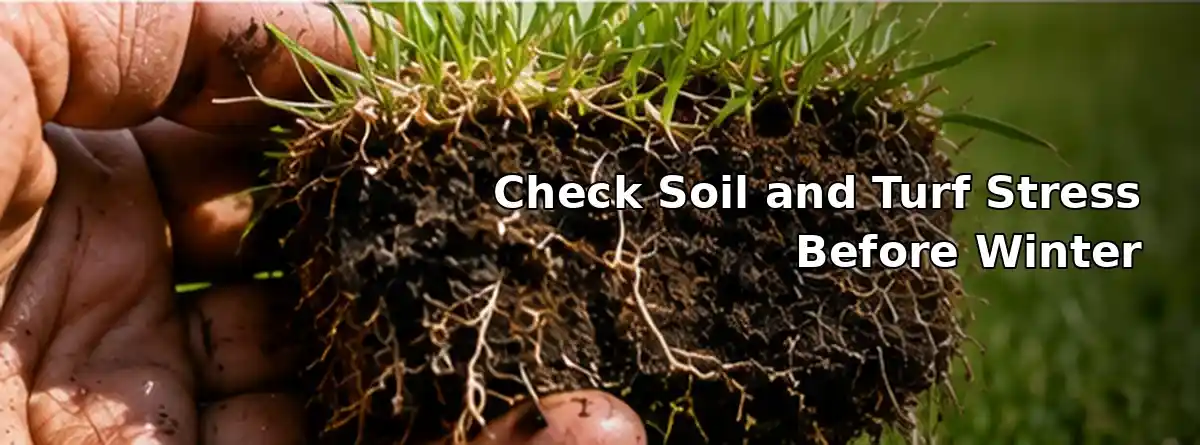
Check Soil and Turf Stress Before Winter
Until the warm-season grass becomes less active, take a close look at the areas which had difficulties during the summer. Hard soil, water that runs off rather than soaking in, shallow root development, frequent patches that become thin, or uneven moisture levels may indicate problems with the soil or with drainage. A thorough assessment of the soil can help in distinguishing between the grass's nutrient requirements and those related to compaction, irrigation, mowing, pests, or diseases.
It is also a good opportunity to record any problem areas in order to aid future planning. Although some corrective services work most effectively when the turf is growing actively, the fact that a problem has been identified at this time does not mean that all the services should be carried out right away.
Why This Matters
Good lawn care in October is not so much about forcing growth in late season as it is about avoiding stress that could have been prevented. If a lawn enters the cooler weather without being overwatered, without receiving unnecessary treatments, or without having weed problems that have not been settled, it will be easier to manage during the transition from one season to the next.
Common Mistakes
- Giving the lawn fertilizer just because it has lost some of its summer colour.
- Maintain the same irrigation schedule as was used during the peak summer heat.
- Trying to treat the turf if it is brown or thin before investigating the moisture, the soil, the pests and any other possible causes.
- Cutting the warm-season grass when it starts to slow down too low.
Best Practices
- Check soil moisture and rainfall before starting irrigation.
- Choose a control strategy after you have identified the weeds.
- Make sure the mower blades are sharp and mow at a height suitable for the grass.
- Note any areas that are thin, wet, dry, or compacted for professional assessment.
The situation varies from one part of the state to another. Soils in the Midlands area may be quite different from those along the coast, and the amount of rain in October can differ from property to property. The rate at which a lawn slows down and the particular problems that become apparent are all influenced by heat, humidity, shade, drainage, the type of grass, and irrigation. quickly a lawn slows and which problems become noticeable.
When to Contact a Lawn Care Professional
If the number of weeds is increasing, if the turf is thinning in an unexpected way, if the water is not penetrating the soil, or if you are uncertain about whether a treatment should be given in October or in a later growing season, then a professional assessment can be of assistance. You can ask for a free consultation with NPK Lawn Care to talk over your lawn, the soil, the weeds, and the possible seasonal treatments.
Final Thoughts
October is a good month in which to safeguard the lawn you've developed during the growing season and to get ready for the months to come; you should concentrate on the condition of the turf, the level of weed pressure, watering, and the soil clues rather than relying on general fall treatments. For additional advice on a seasonal basis, see the South Carolina lawn care tips from NPK Lawn Care.
More South Carolina Lawn Care Resources
Use the seasonal lawn care calendar, compare South Carolina grass types or review our professional lawn care services.