
Published:
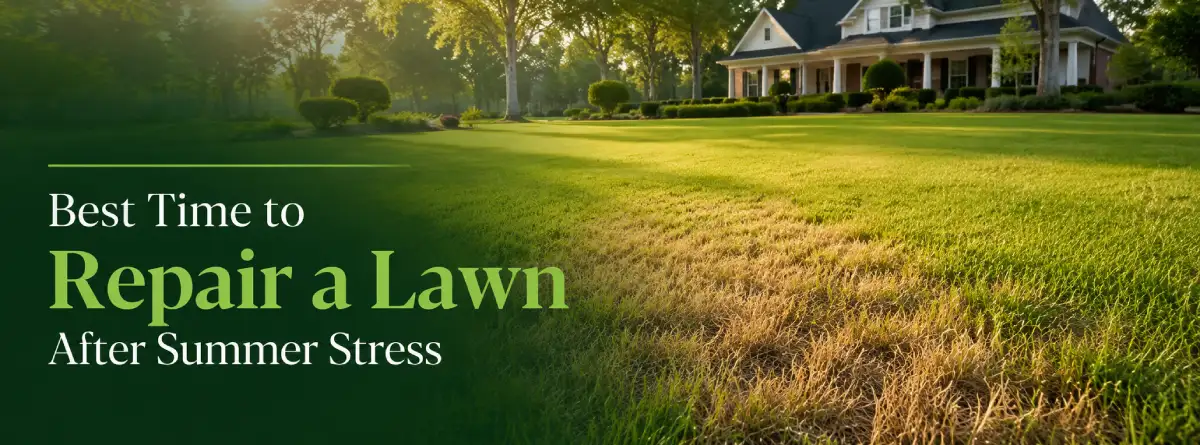
The best time to repair a lawn after summer stress is when harsh heat subsides, but warm-season turf is still growing, typically from late August into September in South Carolina. First, determine whether the damage is due to drought, insects, compaction, disease, mowing, irrigation, or drainage, because the repair should match the cause.
Summer can leave a lawn thin, discolored, weak, or slow to recover. Multiple stress factors, such as heat, drought, heavy rain, compaction, and insects, often combine to worsen damage. An expert assessment and customized lawn treatment can identify what the turf needs before growth slows.
Start With the Cause, Not the Calendar
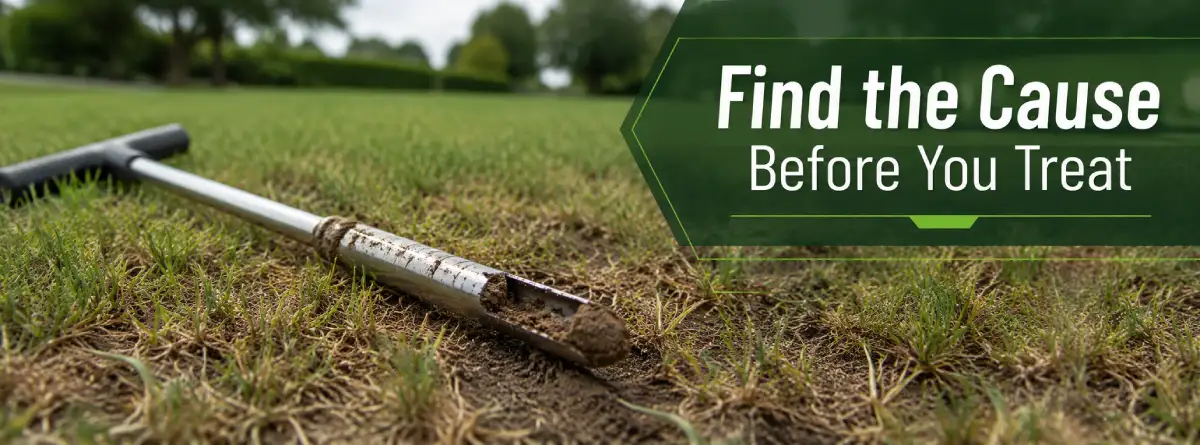
Brown or thinning grass does not always require more fertilizer. Similar symptoms may result from poor irrigation, dull mower blades, low mowing height, compaction, excess moisture, disease, or insects. Start by identifying the likely cause and confirming the turf is still alive and able to recover.
Use the Remaining Growing Season Wisely
Bermudagrass, zoysiagrass, centipedegrass, and St. Augustinegrass recover best during active growth. As nights cool and dormancy approaches, aggressive repairs are less effective. Early fall is ideal for correcting irrigation, treating pests or weeds, and improving soil, but major sodding or renovation may need to wait until growth is stronger.
Match the Repair to the Lawn’s Condition
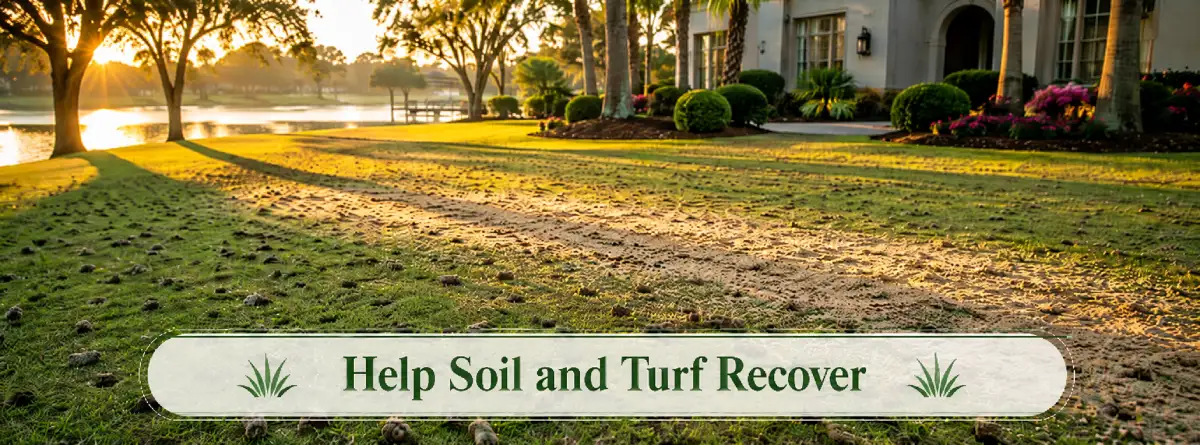
A lightly stressed lawn may recover with improved watering, proper mowing, and a treatment plan tailored to its grass type and soil. Thin turf over hard ground often indicates compaction; professional core aeration should be done while the grass is actively growing. Lawns with poor soil structure or low organic matter may benefit more from targeted lawn topdressing than from general fertilizer.
Why This Matters
Timing determines how much recovery a warm-season lawn can achieve before cooler weather. Acting too early during severe heat can worsen stress, while acting too late may limit recovery. Diagnose the problem, address the cause, and use the remaining growing season for repairs the grass can complete.
Common Mistakes
- Applying extra fertilizer without verifying grass type, soil condition, or the cause of discoloration.
- Watering all brown areas more often, even when drainage, disease, or insects may be the issue.
- Aerating, scalping, or heavily topdressing turf too close to dormancy for recovery.
Best Practices
- Check irrigation coverage and water deeply based on turf, soil, weather, and local restrictions.
- Keep mower blades sharp and avoid removing too much leaf growth at once.
- Have recurring brown patches, loose turf, digging, or unusual insect activity professionally evaluated before treatment.
South Carolina Lawn Considerations
Recovery timing varies across South Carolina. Lawns near Lexington and Columbia may face compaction, high heat, and rapid shifts between drought and storms. Coastal lawns around Myrtle Beach, Conway, Murrells Inlet, and Pawleys Island may remain active longer but face sandy soil, moisture loss, salt exposure, and different insect pressures. Weather and turf growth are more important than a set calendar date.
When to Contact a Lawn Care Professional
Contact a lawn care professional if damage continues to spread, grass pulls up easily, weeds overtake thin turf, irrigation changes do not help, or the cause is unclear. NPK Lawn Care, LLC can assess your lawn, soil, and seasonal conditions before recommending next steps. You can request a free consultation or call 803-360-0605.
Final Thoughts
The best time to repair a summer-stressed lawn is not just “fall.” It is when the worst heat has passed, the cause of the damage has been identified, and the turf is still actively growing. Take a measured approach now to reduce further damage and help the lawn enter the next season in better condition.
Frequently Asked Questions
When should I begin repairing a summer-stressed lawn in South Carolina?
Begin when the most intense heat starts easing, but the warm-season grass is still actively growing. In much of South Carolina, that often means late August into September, although weather and location can shift the window.
Should I fertilize brown grass immediately after summer stress?
Not automatically. Brown turf may be stressed by drought, insects, compaction, drainage issues, mowing, or potential disease pressure, so the cause and grass type should be identified before selecting a fertilizer or lawn treatment.
Can core aeration help a lawn recover after summer stress?
It can be, but only while the warm-season turf has enough active growth to recover. Aeration timing should reflect the grass type, soil condition, weather, and how close the lawn is to dormancy.
How can I tell whether brown grass is drought damage or insects?
Look at irrigation coverage, soil moisture, the pattern of damage, whether turf pulls up easily, and any visible insect activity. Because several problems can look similar, spreading or recurring damage may need professional identification.
Can a summer-stressed lawn recover before winter dormancy?
Minor stress may improve before dormancy when the cause is corrected early enough. Large bare areas or severe root damage may need a longer recovery plan or repair during the next strong growth period.
More South Carolina Lawn Care Resources
Use the seasonal lawn care calendar, compare South Carolina grass types or review our professional lawn care services.