

Published:
Quick Answer: To revive a lawn after summer heat damage, first identify whether the turf is dormant, drought-stressed, compacted, diseased, or damaged by insects. Then correct watering and mowing practices, improve the soil where needed, and use treatments selected for the grass type and growing season.
South Carolina summers can leave warm-season lawns thin, faded, brittle, or slow to recover. Heat is often part of the problem, but drought, heavy rain, compacted soil, dull mower blades, poor irrigation coverage, pests, and nutrient excesses can create similar symptoms. A careful evaluation should come before fertilizer, fungicide, insect treatment, or other customized lawn treatments.
1. Identify What Actually Damaged the Lawn
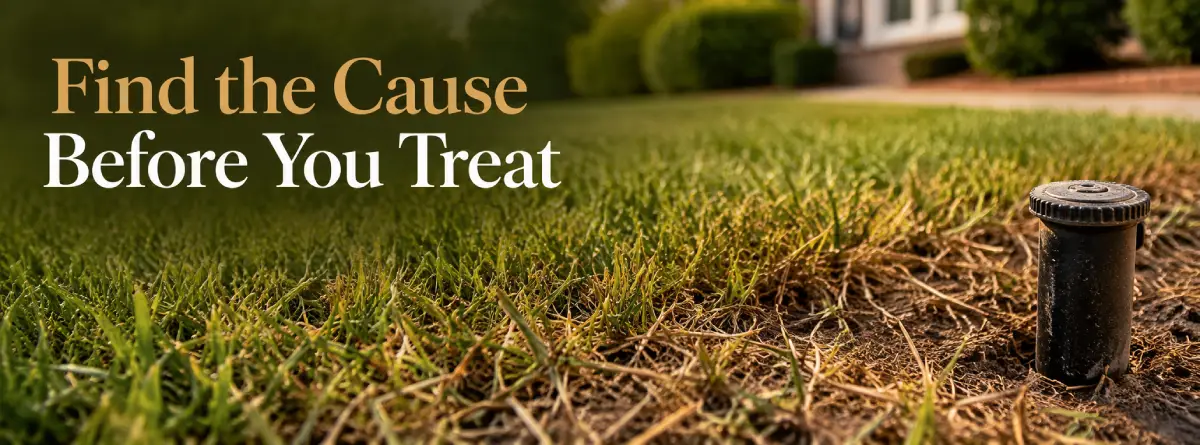
Brown or thin grass does not automatically mean the lawn is dead. Some warm-season turf may slow down or discolor during extreme heat and limited rainfall. At the same time, other areas may be affected by poor sprinkler coverage, compacted soil, disease pressure, chinch bugs, grubs, or mowing too low. Check whether the grass is still firmly rooted, whether the damage follows irrigation patterns, and whether insects or excessive moisture are present before choosing a treatment.
2. Restore Consistent, Deep Watering
Light daily watering can encourage shallow roots and may keep the leaf surface wet longer than necessary. Watering needs depend on rainfall, soil type, turf variety, slope, shade, and irrigation coverage. Apply water deeply enough to reach the root zone, then allow the surface to begin drying before watering again. Repair clogged heads, adjust overspray settings, and avoid automatic watering after a summer storm.
3. Adjust Mowing During Recovery
Heat-stressed grass needs enough leaf surface to produce energy and protect the soil. Avoid cutting off more than one-third of the grass blade in a single mowing, and do not scalp a weakened lawn in an attempt to remove brown growth. Keep mower blades sharp, follow an appropriate height for the turf type, and limit traffic on areas that are already thin or brittle.
4. Relieve Compaction and Improve the Soil
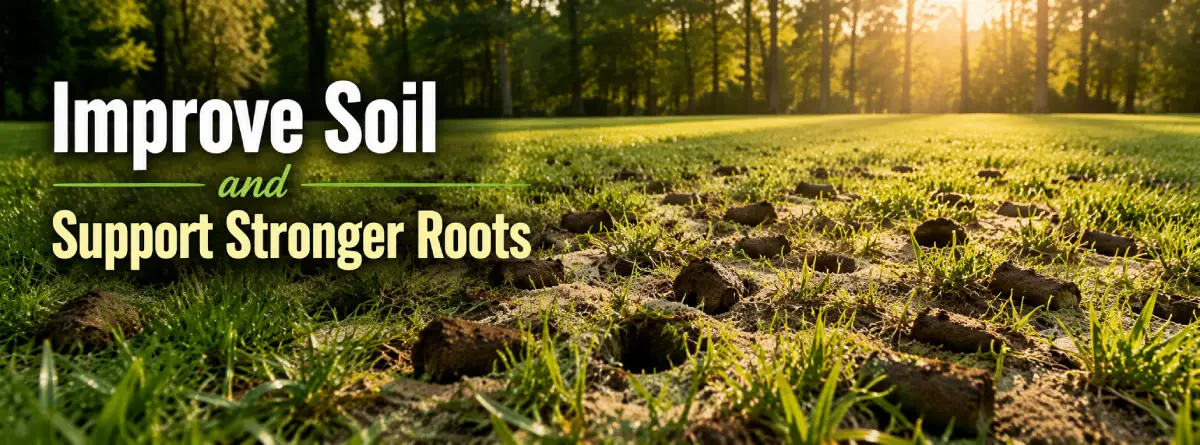
Hard soil limits the movement of air, water, and nutrients into the root zone. If runoff, standing water, shallow roots, or hard ground are part of the problem, properly timed core aeration services may help improve soil conditions while the turf is actively growing. Lawns with weak or sandy soil may also benefit from organic lawn topdressing selected and applied for the site.
5. Use the Right Treatment for the Confirmed Cause
A stressed lawn may need nutrients, weed control, pest treatment, disease management, or simply better cultural care, but those choices should not be guessed from color alone. Fertilizer must match the grass variety, soil condition, season, and recent weather. If insects may be involved, proper identification is important before scheduling professional lawn insect treatment.
Why This Matters
Summer damage can reduce turf density and create open spaces where weeds establish. Addressing the cause while warm-season grass is still growing gives surviving roots and runners a better chance to recover before cooler weather slows growth. The goal is not to force rapid color with a one-size-fits-all treatment, but to rebuild healthier growing conditions.
Common Mistakes
- Applying more fertilizer before checking soil moisture, pests, disease pressure, or irrigation coverage.
- Watering briefly every day without confirming that moisture reaches the root zone.
- Scalping weakened turf or mowing with a dull blade during continued heat stress.
Best Practices
- Compare damaged areas with sprinkler patterns, shade, drainage, and traffic before treating.
- Keep mowing height and watering frequency appropriate for the grass type and current weather.
- Follow product labels and professional re-entry instructions for children and pets after treatments.
South Carolina Considerations
Lawns in Lexington and Columbia often deal with heat, compacted soil, summer storms, and periods of drought. Coastal lawns near Myrtle Beach, Conway, Murrells Inlet, and Pawleys Island may also face sandy soil, salt exposure, high humidity, and fast-draining root zones. Recovery plans should reflect the turf variety and conditions at the property, rather than depending solely on a statewide calendar.
When to Contact a Lawn Care Professional
Expert assessment is useful when damage continues to spread, the turf lifts easily, irrigation changes do not help, insects are suspected, or the lawn stays thin despite normal care. NPK Lawn Care, LLC can review the turf, soil, seasonal conditions, and likely stress factors before recommending a service. Homeowners and property managers can request a free consultation for a customized recovery plan.
Final Thoughts
A heat-damaged lawn usually recovers best when the cause is identified early, and the following steps support the roots instead of chasing quick color. Steady watering, proper mowing, healthier soil, and targeted treatment can help surviving warm-season turf regain density while growing conditions remain favorable.
Frequently Asked Questions
Can a lawn recover after severe summer heat damage?
Yes, if roots, runners, or growing points are still alive, warm-season turf may recover while temperatures remain favorable. Recovery relies on the grass type, soil, watering, damage severity, and whether pests or disease are involved.
How often should I water a heat-stressed lawn?
There is no single schedule for every property. Watering should account for rainfall, soil type, turf variety, shade, slope, and irrigation coverage, with enough water to reach the root zone without keeping the lawn constantly wet.
Should I fertilize brown grass after summer heat?
Not automatically. Brown grass may be dormant, drought-stressed, compacted, diseased, overwatered, or damaged by insects, so the cause and soil condition should be evaluated before fertilizer is applied.
When can core aeration help a damaged lawn?
Core aeration may help when compacted soil restricts water, air, and nutrient movement. It should be timed for the turf type while the grass is actively growing and able to recover.
How can I tell whether insects caused the lawn damage?
Insect damage can resemble drought, disease, mowing injury, or irrigation problems. Expanding patches, wilted turf, loose roots, or visible insect activity may justify professional identification before treatment
More South Carolina Lawn Care Resources
Use the seasonal lawn care calendar, compare South Carolina grass types or review our professional lawn care services.