
Published:
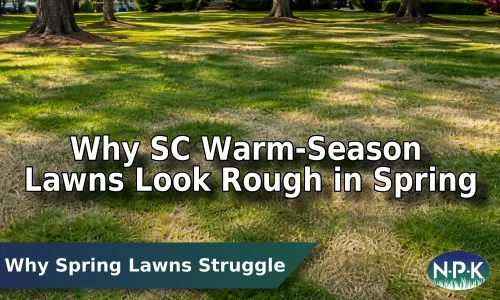
Quick Answer: Warm-season lawns in South Carolina can look brown, thin, patchy, or uneven in spring because the grass is still moving out of dormancy. Cool nights, uneven soil temperatures, winter stress, shade, compaction, or disease from the previous season can all slow green-up before the lawn starts growing steadily again.
For many South Carolina homeowners, spring lawn care can be frustrating. One side of the yard may start turning green while another area still looks tired or straw-colored. Zoysiagrass, centipedegrass, bermudagrass, and St. Augustinegrass all need steady warmth before they fully wake up. A few warm afternoons are not always enough. When lawns need a closer look, professional lawn treatment services can help identify whether the issue is weather-related, soil-related, weed pressure, pest activity, or lingering stress from the previous season.
Why This Matters
A rough-looking spring lawn is not always a failing lawn. Warm-season grass often needs patience, steady temperatures, proper mowing, good watering habits, and the right timing of treatments. Fertilizing too early or applying the wrong product before the lawn is actively growing can create more stress than help the grass recover.
Common Mistakes
- Assuming every brown patch is caused by disease or insects.
- Fertilizing too early, before the lawn is actively growing.
- Ignoring soil compaction, drainage problems, or heavy shade.
- Cutting dormant or weak turf too short in early spring.
- Using DIY weed or pest products without first understanding the lawn's condition.
Best Practices
- Wait for steady, warm weather before judging the lawn's full condition.
- Look at the pattern of damage instead of focusing on color alone.
- Keep mowing height appropriate for the grass type and season.
- Use soil analysis when nutrient needs or pH concerns are unclear.
- Consider a professional evaluation when patchy areas continue to spread or fail to recover.
Local Relevance
Lawns in Lexington and Columbia may deal with heat, compacted soil, and periods of dry weather, while coastal lawns in Myrtle Beach, Conway, Murrells Inlet, and Pawleys Island may face sandy soils, humidity, salt exposure, and different weed pressure. These South Carolina conditions can all affect how quickly a warm-season lawn greens up and how well it responds to treatment.
Because soil, drainage, sunlight, and weed pressure can vary from one yard to the next, a one-size-fits-all approach rarely works well. A local South Carolina lawn care company can look at the property, identify the real cause of the problem, and recommend the right next step.
When to Contact a Professional
You may need professional help if the lawn has spreading patches, heavy weed pressure, compacted soil, thinning turf, visible insect activity, or areas that remain brown even when the rest of the lawn is actively growing. A custom lawn care plan may include soil analysis, fertilization, weed control, aeration, or lawn pest control and treatment, depending on what is actually happening in the yard.
Final Thoughts
South Carolina warm-season lawns can look rough in spring, but that does not always mean something is seriously wrong. The best approach is to watch the lawn closely, avoid pushing it too early, and make treatment decisions based on grass type, soil condition, weather, and lawn history.
To discuss a custom plan for your property, request a free consultation with NPK Lawn Care.
Frequently Asked Questions
Why does my South Carolina lawn look brown in spring?
Your lawn may still be coming out of dormancy. Warm-season grasses often need consistent warm nights and warmer soil before they fully green up.
Should I fertilize my warm-season lawn as soon as it turns green?
Not always. Fertilizer should be timed carefully because applying it too early can stress the lawn instead of helping it recover.
How do I know if my lawn has disease or is just slow to green up?
Look at the pattern. General slow green-up is often weather-related, while circular, spreading, or irregular patches may need professional evaluation.
Can aeration help a patchy warm-season lawn?
Aeration can help when soil compaction limits the movement of air, water, and nutrients around the roots. It is most useful when timed properly for the grass type.
When should I call NPK Lawn Care about spring lawn problems?
Contact NPK Lawn Care if patches keep spreading, weeds are taking over, the soil seems compacted, or the lawn does not improve once warm-season grass is actively growing.
More South Carolina Lawn Care Resources
Use the seasonal lawn care calendar, compare South Carolina grass types or review our professional lawn care services.